
Gavhar Safayeva: When you have people who share your values working with you, you move faster
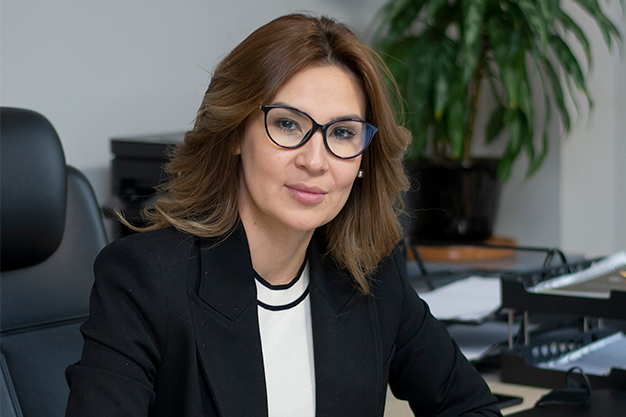
skills: translator, philologist, HR director, voting partner.
Gavhar has been HR Director at HM Partners for more than 10 years. She is a witness, initiator and participant in many of the transformation processes that Hikmat and Muzaffar described. Today, thanks to Gavhar, we will look at HM Partners from a different angle.
Gavhar, how and through what was the group’s reputation as an employer built?
Everyone wants to work in a stable company with a strong reputation, not in some noname one-day firm. So that people could answer the question “Where do you work?” with pride. And for employers, it is important that the company is attractive to job applicants: this is an additional competitive advantage.
I joined HM Partners at a time of change. On the one hand, the company already had a good business reputation, but on the other hand, it needed to work on its reputation as an employer.
During this period, the company was scaling up, actively developing, and a new business centre was under construction. It was a challenge not only for the business owners, but also for all the employees, as it was necessary to learn a lot and grow as a team. Not everyone was ready for this. Staff motivation was quite low, and the team was fragmented. There was no understanding of what makes all these people come to work every day, what motivates them and makes them proud to work for the company.
With my arrival, business owners have developed an understanding of how to link internal business processes with corporate governance tools from a professional HR position and build a strong team with a clear understanding of their work and the company’s goals.
When we started to change the internal structure of work, the processes to which everyone was accustomed, we encountered resistance from the staff: many people did not understand why and for what purpose it was being done, the changes were perceived as complicating work and creating a “headache” for everyone.
In the process of integrating corporate management tools, we completely changed the recruitment and hiring process, introduced an adaptation and grading system with a salary scale, started setting goals and evaluating them, and developed many different motivational programmes. All of this led to the fact that we almost completely renewed our staff and assembled a team that was ready to work and grow in the new conditions and processes.
We must pay tribute to the fact that Hikmat and Muzafar were not unsubstantiated in their desire to transform, and despite all the resistance and difficulties on the part of the staff, they confidently went towards the desired result – make the company competitive and attractive not only for clients, but also for job seekers. This means that this company should not only have its own corporate culture and a strong team, but also a common mission and values.
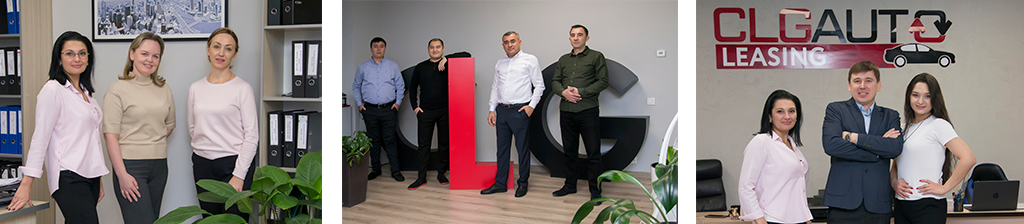
Mission and values – what are they about?
Values are an integral part of business. When I joined HM Partners, the company only had a mission statement, which gave employees an understanding of how the company benefited society. But there were no unifying values – those moral and business principles to which all employees would adhere.
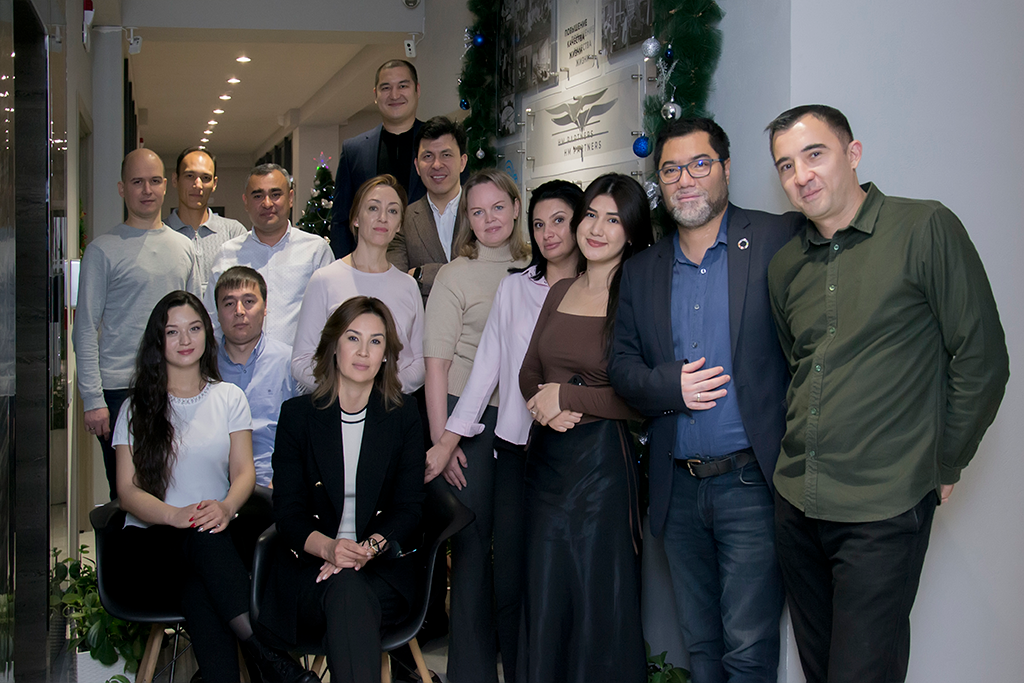
Defining values was a team effort. Employees noted what makes them wake up in the morning and come to the office, what motivates them to work in the company, what they are proud of and what they are not ready to give up under any circumstances. The result of the joint work was 4 corporate values that are close to everyone and do not contradict the personal values of each of our employees:
- honesty and responsibility;
- improving the quality of life (our own and of those who partenrs with us);
- growth and development;
- engagement and being result-oriented.
They are still relevant today and are the basis for the formation of the HM Partners team.
Do you have examples of how values are realised in the life of the company?
When it comes to growth and development, the company has always devoted a lot of attention and resources to staff training. All employees and managers of HM Partners have been trained in sales, service, market analysis, creating business plans and budgeting, setting strategic company goals based on these and cascading them to the entire staff.
We learnt together, practically from scratch, how to run a modern business. Yes, of course, there were people who have left the company. But already with a different quality, not because they did not want to work with us, but because they had grown up, “hit the ceiling”, become so independent and business-savvy that they went and started their own business.
We are often asked: “You train so much, invest so much in staff development, and in the end people leave, is it worth investing in their training?”, to which Hikmat always answers: “It is better to train an employee and he leaves afterwards, than not to train him and he stays with us”.
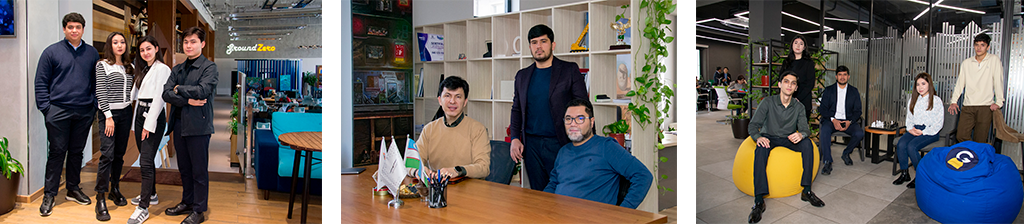
Seeing everyone growing, learning and starting a business, we came up with the idea of introducing an internal intrapreneur programme that allows our employees – both current and former – to become a partner and launch a joint project. An example is MediTech, a company created together with the head of one of our business lines, CLG Auto. The only condition in the programme is not to create a competing structure. This has happened, in which case, of course, we had to say goodbye. This is an indicator of a person’s decency and honesty.
The other value – engagement and working for results – is illustrated by the HR tools we have implemented.
And what HR tools do you use?
For two or three years, Muzaffar and I have been working on the development and implementation of corporate governance tools, studying the business from the inside. It was important for me to understand what each employee was like, whether they had an understanding of their functions, business processes and the company’s goals. As a result, we created profiles for each position, where everything is detailed.
All the tools that work in international companies currently work for us as well. Every implementation, every new idea goes through a stage of testing and processing. We collect feedback and ask employees what they think about it. For example, we have introduced a tool called “Goal-setting and evaluation of personnel”. The company has strategic goals, on the basis of which goals are formed for each division of the group of companies, and then they are cascaded to all personnel working in one or another division. As a result, everyone understands where the company is aiming at and what results it expects from each employee. The introduction and active use of this tool led to the birth of the DOIRA project.
What is DOIRA and who invented it?
DOIRA was born thanks to Muzaffar and his passion to automate and improve everything. At the time the idea was born, we had lived through all the disadvantages of setting and evaluating KPIs in Excel: loss of information in forwarding letters back and forth, lack of transparency of results, lack of awareness of the results, violation of deadlines, etc.
The result of the idea was the DOIRA prototype – a unified platform for setting and evaluating KPIs and assessing competences. All the accumulated problems with Excel were solved at once. Today, our employees close reports on time, can see their results at any time, receive regular feedback and all processes are transparent and clear.
Now the process of transformation of DOIRA into a cloud solution is underway, so that other companies have the opportunity to skip the complexities and use a working tool adapted for Uzbekistan to assess the effectiveness of personnel.
In conclusion of these three different interviews, it is safe to say that the company is like a mirror reflecting its founders, and their values and beliefs directly influence the business and form a team of like-minded people.
Hikmat Abdurakhmanov, Muzaffar Kasymov and HM Partners are an example of how difficulties harden those who are ready to learn, develop and be true to themselves and their values.
It is not for nothing that their mission is to make business and wealth available to customers, partners and employees, to help them develop through openness to co-operation, services and products provided, accumulated experience and knowledge.
Hikmat and Muzaffar actively share their experience and knowledge both with employees and outside the company. The DOIRA project is a proof of this.
I am glad that there is a small group of companies in Uzbekistan that not only have managed to build an intelligent business, to introduce the best international practices in working with personnel, but also have managed to make these practices work.
The very fact that they are not stopping at what they have achieved, but learning new things and transforming their business, says that Hikmat and Muzaffar have new horizons ahead of them, which they will surely conquer.
Sasha Ivanujenko